Opens with a Crisis Quick-Start on page one.
Because if money is moving, everything else can wait.
Six steps, one per chapter — ending in the habit that defeats the call.
“Grandma, I’m in trouble. Please don’t tell Dad.”
It is your grandson’s voice. The panic is his, the way he says your name is his. It is not him — it is a few seconds of audio scraped from a video he posted, run through software that costs nothing and takes no skill.
In 2025, Americans reported losing $15.9 billion to fraud, the highest total on record. Imposter scams — someone pretending to be a person you trust — became the most-reported category of all, appearing in nearly one in three reports. Voice cloning is why.
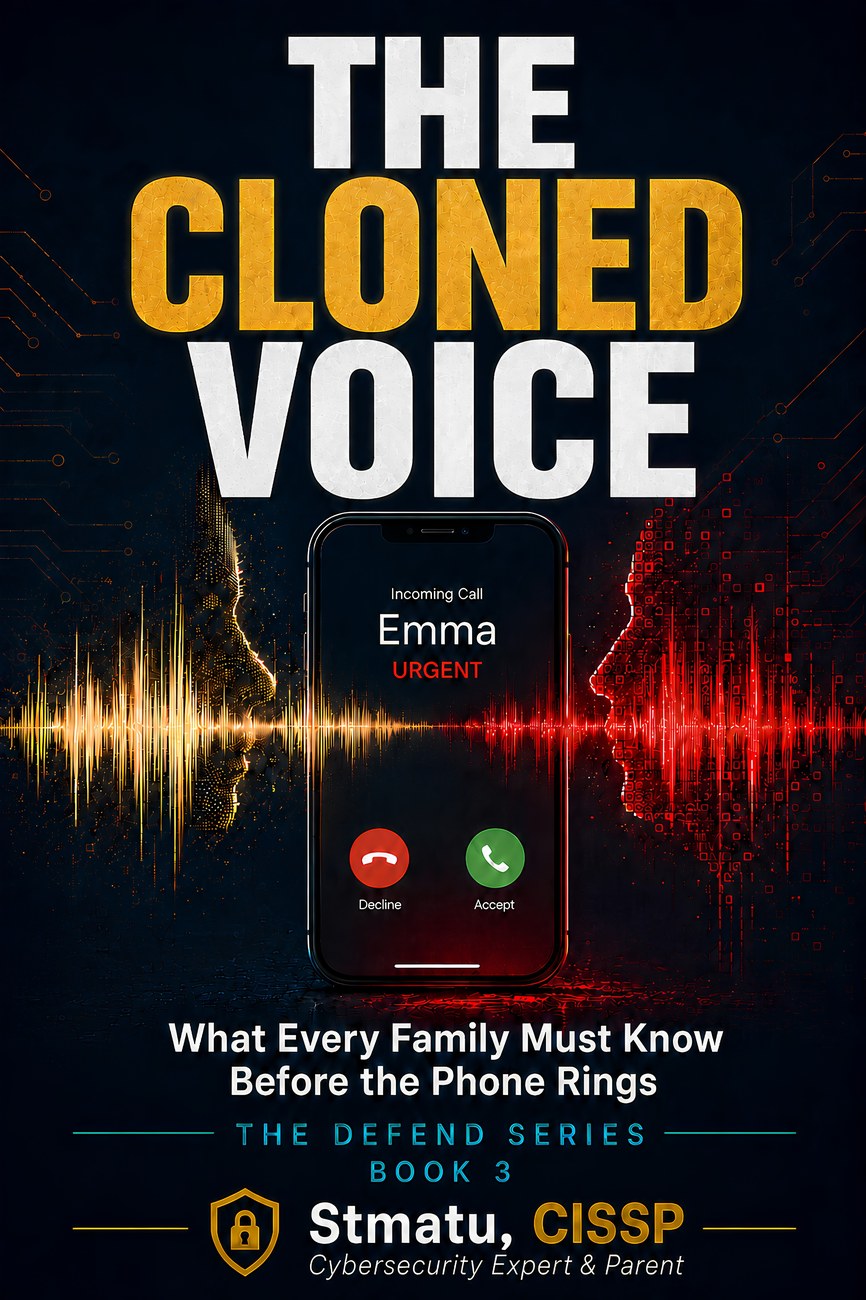
The Cloned Voice is a cybersecurity expert’s plan for the call before it comes, and for the ten minutes after it does. It opens with a Crisis Quick-Start on page one, then works through the VERIFY framework: what the technology really does, how the scam is run, the tells that give it away, what of your voice is already public, the safe word and call-back rules that stop it, and how to hold the line under pressure.
Written for everyone the call touches: the older parent or grandparent most likely to receive it, the adult child who can put the family plan in place first, and the parents of teenagers whose voices are already scattered across the internet. Includes a family safe-word agreement, an emergency call verification checklist, a bank and payment recovery checklist, a voice exposure audit, and a one-page refrigerator card for the people who need it by the phone.
No emergency is too urgent to verify. That one habit is the whole defence.
From the Introduction — The Voice You Trust Most
The phone rings late.
The voice on the other end is your daughter’s, and she is crying. There has been an accident; she is frightened, she is in trouble, and she needs your help right now. You would know that voice anywhere. That, exactly, is the problem.
Only a few seconds of clear recorded audio can now be enough for widely available software to produce a recognizable imitation of a person’s voice — its tone, its rhythm, the way it climbs when they are afraid. At its best, the result can cry, plead, and say your name. And when it calls, it does not arrive as a stranger to be doubted. It arrives wearing the voice of someone you love, which is the one voice your judgment was built to trust without checking.
The people who fall for these calls are not careless, and they are not foolish. They are loving. A voice-cloning scam does not attack your intelligence; it attacks your instinct to protect the people you care about. It manufactures an emergency, wraps it in a familiar voice, and then removes the two things you need to think clearly: time and other people.
This book is about closing that gap: the space between a voice you recognize and a fact you have confirmed. It will not ask you to be afraid of your phone, to stop calling your family, or to disappear from the internet. It will ask you to do one small, powerful thing before money or information ever changes hands — verify the situation, never the voice.
If a call is happening now, or money has already moved, these are the same channels the book sends you to. The first hour is when recovery is still possible.
This is the companion to Deepfakes Exposed: where that book deals with the fake face, this one deals with the fake voice. Teen Sextortion covers the crisis aimed at teenagers.
See all three books The Is AI Replacing Parenting? series